
Brake Pad Manufacturing Process
For importers, distributors and professional buyers, understanding how a brake pad is made helps clarify which production stages have the greatest influence on quality.
1. Raw friction material
Friction material is the functional core of a brake pad. Each manufacturer develops its own formulas, and the formulation strongly influences product performance. Common categories include metallic, semi-metallic, ceramic and NAO formulas.
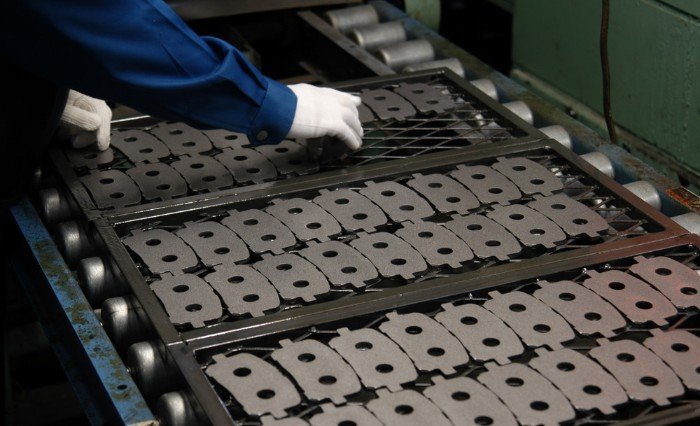
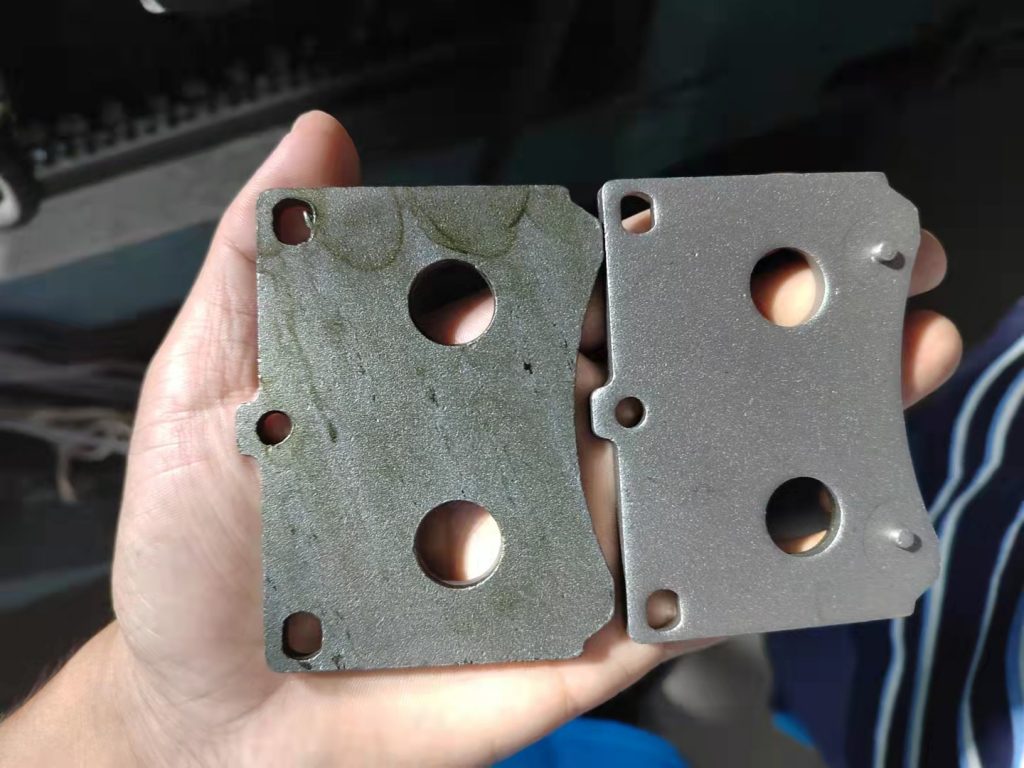
2. Steel backing plate
Brake pads may use hole, wire-mesh, cast-iron or NRS-style backing plates. To create a clean surface without oil and rust, the steel plate is shot-blasted before adhesive is applied.
3. Hot pressing
Heat and pressure form the friction material and bond it to the backing plate. Accurate process control is essential for consistent density and attachment.
4. Curing and heat treatment
After forming, brake pads are cured so the friction material can reach its intended performance characteristics. This is a key production stage.
5. Grooving, slotting and chamfering
Finishing features help the pad match the brake rotor and application design. Slots and chamfers can support noise control, cooling and dust evacuation.
6. Painting
Powder coating is applied to protect and finish the backing plate. JIALI uses an automated painting line for this stage.
7. Indicator installation
Wear indicators or sensors are installed where the application requires them.
8. Marking and shim installation
Product identification and branding are applied, then the application-specific brake pad shim is installed where required.
9. Shrink packaging
Finished brake pads are identified, packed and prepared for final shipment inspection.