
Five Ways to Identify Ceramic Brake Pads
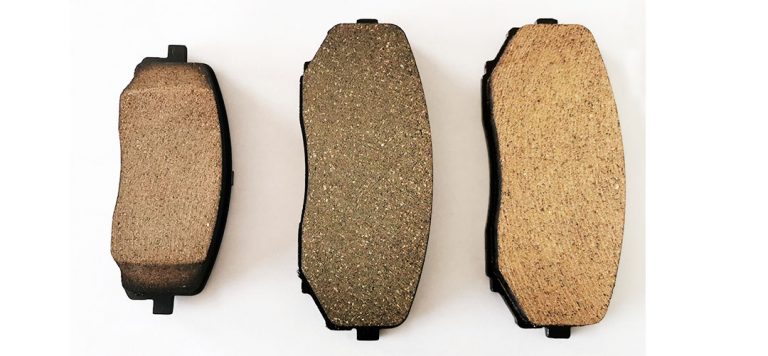
What are ceramic brake pads?
Ceramic brake pads use a durable ceramic-based compound that may be reinforced with additional friction materials for braking performance and heat management.
Ceramic formulas are commonly selected for quiet operation, reduced visible dust and consistent behavior across a range of everyday temperatures and driving conditions. Because products sold as “ceramic” can vary significantly, professional material and performance testing remains the best method of identification.
1. Observe the friction-surface appearance
Ceramic-style material often has a pebble-like, relatively uniform surface without the sharp metallic sparkle commonly visible in formulas containing larger metallic fibers.
2. Check surface dust by touch
A clean ceramic-style surface may leave less dark metallic residue on the fingers than a semi-metallic formulation. This is only a basic observation, not a laboratory test.
3. Look for corrosion in the friction material
Predominantly ceramic material itself does not rust like steel. Visible rust within the friction surface may indicate the presence of iron-containing fibers, although the steel backing plate can still corrode if it is not protected.
4. Observe wear residue
Ceramic pads commonly create lighter-colored wear residue, while metallic and carbon-rich formulas may produce darker dust on the rotor and wheel.
5. Use a magnet as a basic screening method
Strong attraction between a magnet and the friction material can indicate a meaningful amount of ferrous material. It does not, by itself, determine the complete formulation.
Conclusion
Color, surface feel, corrosion, wear residue and magnet response can provide quick clues, but accurate identification requires material-composition analysis and friction-performance testing.